
The Importance of On-Field Rehabilitation When Recovering From Injury!

Resisted Acceleration Drill
On-field (or on-court) rehabilitation is an essential component of injury rehabilitation programmes, helping players transition from gym-based training back to team training (1,5). This blog outlines the key components of on-field rehabilitation (OFR) and details why it is essential for athletes when returning from injury.
The 5 Stages of On-Field Rehabilitation
The 4 Pillars of Rehabilitation
Why is it Frequently Overlooked?
GPS & Heart Rate Monitoring
When Can I Return To Team Training?
What Should My Rehab Look Like?
The 5 Stages of On-Field Rehabilitation
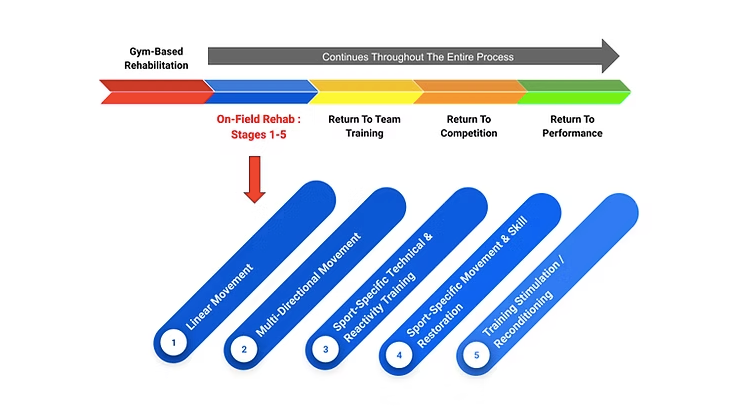
Figure 1. The 5-Stage Recommended Injury Rehabilitation Process (1)
Whether you're an athlete who is rehabbing an injury or a rehabilitation practitioner (i.e. sports physiotherapist or strength & conditioning coach), the following sections will allow you to understand what a comprehensive injury rehabilitation process should look like. OFR should be in-cooperated into all medium-to-long term injury rehabilitation programmes. However, too often OFR is either programmed poorly or even skipped entirely, with individuals transitioning from their gym-based rehabilitation, into some linear (straight-line) running and straight into full team training. Neglecting OFR in this manner will likely lead to a re-injury or an injury elsewhere.
One must consider the physical, psychological, tactical and technical demands of sport (2). Athlete's who are injured become physically de-conditioned, demonstrate reduced confidence levels and often have a fear of re-injury. Off-feet conditioning work (i.e. stationary bike, ski erg, swimming) can and should be prescribed at an appropriate stage during rehabilitation, but nothing can replicate on-feet running-based conditioning. An on-field period of rehabilitation is therefore vital to prepare an athlete both physically & psychologically for their sport. As well as helping to develop load tolerance at the injured site, OFR also exposes the player to sport-specific skills (1,2). The table below outlines the 4 pillars of rehabilitation (2). Restoring each quality throughout the rehabilitation process is key to a successful outcome.
The 4 Pillars of Rehabilitation

-
Both sagittal and frontal plane movement impairments are frequently observed following ACL surgery (9), making the restoration of movement quality critical during rehabilitation. Video analysis is instrumental in determining how an athlete executes change of direction tasks. Despite individual movement variability, the evaluation focuses on whether the athlete aligns with an ideal technical movement model. This approach not only aids in reducing the risk of future injuries, but may also enhance performance.
-
It is vital that an athlete restores their sport-specific fitness profile during rehabilitation (9). In order words, are they prepared for the physical demands that full training sessions and games entail? The physical profile of an athlete will vary between sports (e.g. field hockey v's rugby), playing positions (e.g. defender v's midfielder), gender and playing level (9). One should consider the number of high-intensity deceleration, acceleration and changes of direction that an athlete commonly performs in their sport. The total distance covered during a game, along with the number of high-intensity running meters, will determine the energy system contributions. The literature on time-motion analysis should be employed to inform pitch-based training sessions, starting with the end-goal of meeting match-day physical demands and working backward from there.
-
“It is important to allow the player to practice all techniques and skills prior to return to sport, for confidence and performance” (2). This pillar involves restoring both the technical and tactical components of the sport.
-
“Avoiding fatigue where possible is important for both athletic performance and general injury risk (10)”. It is important to ensure that the athlete has regained a sufficient level of cardiovascular fitness, in line with the demands of the sport. We use GPS to measure progressive increases in external load.
Why is On-Field Rehab Frequently Overlooked?
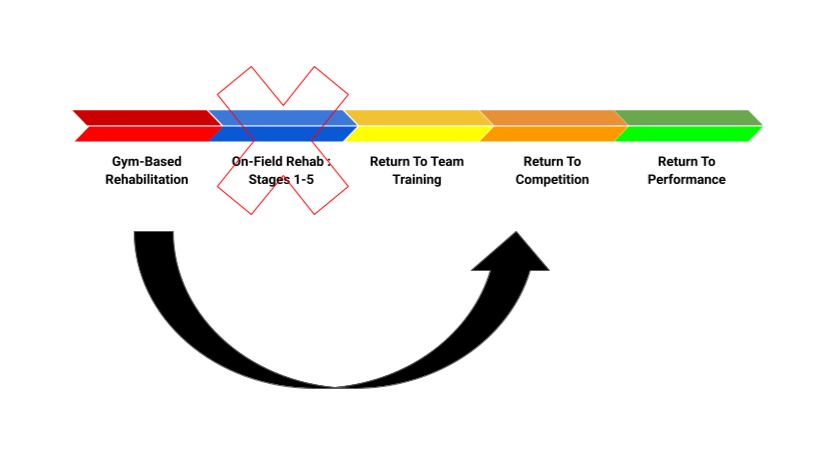
Figure 2. The Missing Component : On-Field Rehabilitation
OFR is often poorly executed or not completed at all. The injured player should know from Day 1, that OFR is a component of their rehabilitation. It is often the case that people will think that they are ready to return to sport, as their pain has ceased. Unfortunately, being pain free, does not mean that one is fit to play and perform at a high level again. This is where expectations and communication are key. Figure 2 outlines how individual's can entirely skip or skim through the OFR stages 1-5. Other reasons for this can include a lack of understanding from your rehab practitioner of how to deliver OFR and of the demands of your sport. OFR may be outside their scope of practice, therefore onward referral to a suitable sports physiotherapist / strength and conditioning coach is essential. Supervised pitch or court-based sessions will ensure that movement quality (Pillar No.1.) is prioritised, throughout the return to play process. Therefore, your practitioner should be on the pitch/court with you, to ensure that compensatory movement strategies are identified & corrected.
In rehabilitation, it's not only what you do that matters, but how you do it!
Figure 1 outlines the 5 stages of OFR (1). I would argue that if you have sustained an injury and you haven't completed these 5 stages, then you have NOT rehabbed optimally. You don't get injured on a physio table, so you should not perform the majority of your rehabilitation there. Failing to complete rehabilitation may lead to an unsuccessful return to sport and will likely increase your risk of future injury. Both volume and intensity are manipulated as the player is guided through the 5 stages. Pre-planned movement tasks in the early stages (i.e. high control) are progressed to more complex, reactive and representative neuro-cognitive tasks in the later stages (high chaos) (7). The later stages of rehabilitation must occur under chaotic conditions, in order to replicate the unpredictable nature of the sport (7). The contents of stage 5 sessions should mirror the intensity and volume of team training.
OFR : Measuring External Workload
To ensure that a progressive increase in training load occurs over the OFR period, we must measure various metrics from our training sessions (i.e. acute load). GPS (e.g. StatSports) is used to measure a variety of running-based data, with heart rate monitoring (e.g. Polar H10 Sensor) key to ensuring that the athlete is working at optimal intensities. Recording this acute training load data allows the accumulated load over the OFR period to be measured (i.e. chronic load) (4). Other benefits of GPS include maximal running speed monitoring and ensuring that players meet position-specific targets (6). One must also consider internal load (i.e. the player's response to the training session), via a rate of perceived exertion (RPE) score or wellness questionnaire (6). Table 2 outlines the key metrics that we commonly measure during OFR sessions (2).
Table 2. External & Internal Metrics Measured During On-Field Rehabilitation Training (2)
Returning To Team Training Following Injury
“Athletes who met ACL discharge criteria were six times more likely to return to pivoting sports compared with those who stopped rehabilitation early" (8)
This is the most common question that is asked by individuals following an injury is, when can I return to training. The answer is NOT time-based, but criteria-based. One is deemed physically and psychologically ready to return to team training once they have completed stage 5 of on-field rehabilitation, as well as passing a battery of tests (1). Each test will have a specific benchmark score that you will need to meet, in order to pass the test. This test battery should cover the following :
Psychological readiness questionnaires
Clinical tests (pain, swelling & range of motion)
Maximal strength
Endurance strength
Explosive & reactive strength
Movement video analysis
Completed OFR Stages 1-5
What Should My Rehab Look Like?
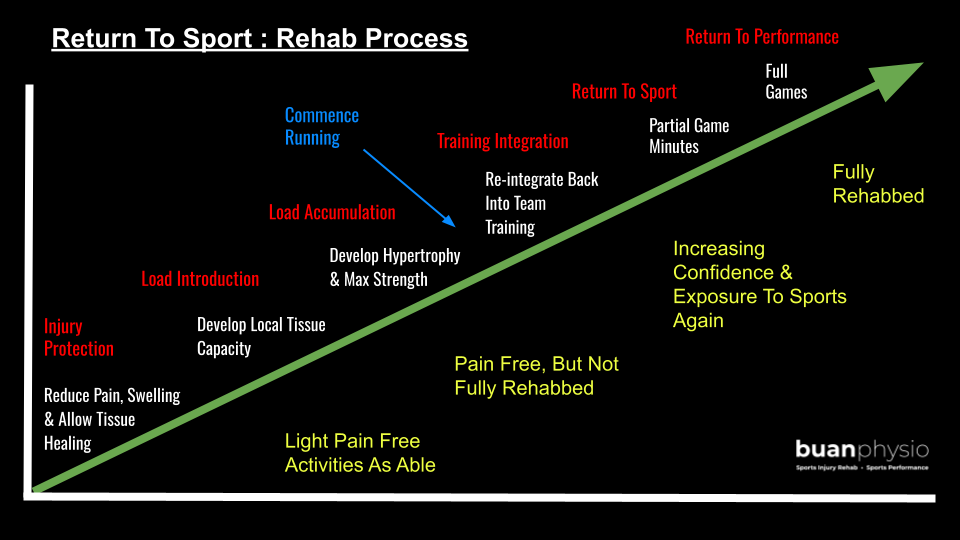
Figure 4. An Optimal Rehabilitation Timeline
For athletes involved in team sports, your on-field or on-court rehabilitation commences during phase 4. Decelerations, accelerations, change of direction speed and high speed running are all introduced over a number of weeks. Drills that are pre-planned in nature initially, progress to more reactive chaotic representative tasks as you progress through the 5 stages of OFR. Drills will begin to incorporate the use of the ball, in addition to engaging in contact work. The quality of movement throughout all 5 OFR stages is paramount, with both video analysis and a coaching eye employed to ensure this objective. Ultimately, stage 5 OFR sessions should bear a strong resemblance to a team training session.
Conclusion
If you or someone you know has sustained an injury, on-field rehabilitation must be a key component of your return to sport journey. On-field rehabilitation will help you to regain your fitness, improve your ball skills and increase your confidence following an injury. Sessions are tailored to your specific sport, i.e. soccer, gaelic football, hurling, basketball, field hockey, etc. Following this progressive pathway will also mean that you're in a better place once you return to the pitch or court, all whilst reducing your risk of future flare-up's or future injury.
Express your interest in this key component of rehabilitation. Get in touch with me via email info@buanphysio.ie or by phone on 087 186 0194. Alternatively, book online using the button below.
I look forward to working with you.
Success Stories
ACL Reconstruction
"Declan is always very professional and thorough. With his guidance and dedication my daughter who had a torn ACL and reconstruction was back to full sports in 10 months which is an amazing achievement. I can’t recommend Buan Physio enough!" Nikki
Hip Avulsion Fracture
"Declan Hardy was recommended to me by a friend. My son had a hip avulsion fracture from sports. Declan worked with my son and he did specific strengthening exercises, on-field rehabilitation, among other things. My son and I were really pleased with these treatments as they helped his pain and discomfort a lot over time. I would highly recommend Declan if you are in need of a physiotherapist who is an active listener, he truly cares about his patients and wants the best for them." Mirela
References
Buckthorpe, M., Della Villa, F., Della Villa, S., & Roi, G. S. (2019). On-field Rehabilitation Part 2: A 5-Stage Program for the Soccer Player Focused on Linear Movements, Multidirectional Movements, Soccer-Specific Skills, Soccer-Specific Movements, and Modified Practice. The Journal of orthopaedic and sports physical therapy, 49(8), 570–575. https://doi.org/10.2519/jospt.2019.8952
Buckthorpe, M., Della Villa, F., Della Villa, S., & Roi, G. S. (2019a). On-field Rehabilitation Part 1: 4 Pillars of High-Quality On-field Rehabilitation Are Restoring Movement Quality, Physical Conditioning, Restoring Sport-Specific Skills, and Progressively Developing Chronic Training Load. The Journal of orthopaedic and sports physical therapy, 49(8), 565–569. https://doi.org/10.2519/jospt.2019.8954
Buckthorpe, M., Frizziero, A., & Roi, G. S. (2019b). Update on functional recovery process for the injured athlete: return to sport continuum redefined. British journal of sports medicine, 53(5), 265–267. https://doi.org/10.1136/bjsports-2018-099341
Taberner, M., Allen, T., O'keefe, J., & Cohen, D. D. (2022). Contextual considerations using the 'control-chaos continuum' for return to sport in elite football - Part 1: Load planning. Physical therapy in sport : official journal of the Association of Chartered Physiotherapists in Sports Medicine, 53, 67–74. https://doi.org/10.1016/j.ptsp.2021.10.015
Armitage, M., McErlain-Naylor, S. A., Devereux, G., Beato, M., & Buckthorpe, M. (2022). On-field rehabilitation in football: Current knowledge, applications and future directions. Frontiers in sports and active living, 4, 970152. https://doi.org/10.3389/fspor.2022.970152
Armitage, M., McErlain-Naylor, S. A., Devereux, G., Beato, M., Iga, J., McRobert, A., Roberts, S., & Buckthorpe, M. (2024). On-field rehabilitation in football: current practice and perceptions. A survey of the English Premier League and Football League. Science & medicine in football, 1–10. Advance online publication. https://doi.org/10.1080/24733938.2024.2313529
Taberner, M., Allen, T., & Cohen, D. D. (2019). Progressing rehabilitation after injury: consider the 'control-chaos continuum'. British journal of sports medicine, 53(18), 1132–1136. https://doi.org/10.1136/bjsports-2018-100157
Kotsifaki R, King E, Bahr R, et al. (2025). Is 9 months the sweet spot for male athletes to return to sport after anterior cruciate ligament reconstruction? British Journal of Sports Medicine. doi: 10.1136/bjsports-2024-108733
Sterns KM, Pollard CD. Abnormal frontal plane knee mechanics during sidestep cutting in female soccer athletes after anterior cruciate ligament reconstruction and return to sport. Am J Sports Med. 2013;41(4):918–23.
Buckthorpe M. (2019). Optimising the Late-Stage Rehabilitation and Return-to-Sport Training and Testing Process After ACL Reconstruction. Sports Medicine, 49(7), 1043–1058. https://doi.org/10.1007/s40279-019-01102-z
