
Youth Athlete Development : The Benefits For Your Child!
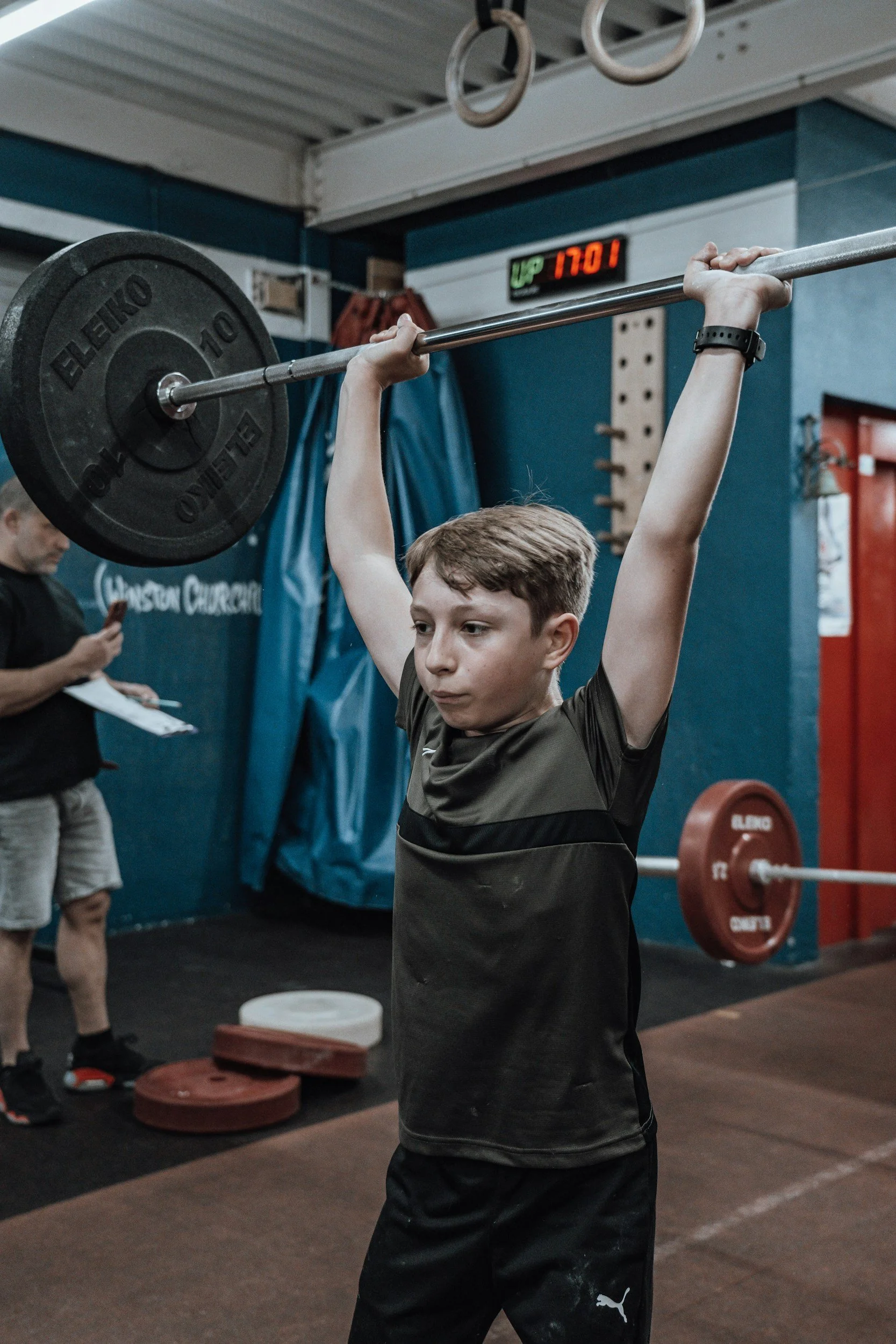
Youth Athlete
There is a substantial amount of evidence supporting the exposure of adolescent athletes to fundamental motor skills at an early age. According to the National Strength and Conditioning Association, long-term athletic development (LTAD) should focus on:
promoting the development of general athleticism
enhancing physical literacy
reducing injury risk and
assisting in lifetime health and wellness
(NSCA, 2019)
Rather than early specialisation in one sport, kids should play a wide range of sports, which should expose them to a broad range of motor skills. The health and wellbeing of the child is central to LTAD programmes, with a pathway towards physical literacy emphasised (NSCA, 2019). Physical literacy incorporates confidence, competence and resiliency.
How do I know if my child is ready to engage in a LTAD programme?
It is appropriate for children to engage in a LTAD programme once they are emotionally mature enough to accept and follow instructions; and when they possess competent levels of balance and postural control (NSCA, 2016). This can be from 6-7 years of age onwards. Exercises are only progressed to more challenging variations, once the individual has shown that they are technically competent in the current level
Exercise selection and progression is largely driven by each individual's technical competency (NSCA, 2016)
Youths of all ages, abilities and aspirations should engage in LTAD programs that promote both physical fitness and psychosocial well-being (NSCA, 2019). The following blog outlines the major benefits of a Youth Athlete Development Programme for your child.
The 5 Benefits of Long-Term Athletic Development For Your Child!
1. Promote Health & Wellbeing!
With screen time being considerably higher than it was in the 1980's (that wouldn't be hard mind you), kids are spending a lot more time in sedentary positions in comparison to previous generations.
This clearly means less time spent at formal sport or performing physical activity, which may be detrimental to their health in the long-term.

Excessive Screen / Game Time, Leading to a More Sedentary Lifestyle!
2. Learn Fundamental Movement Skills!
The adolescent years can be challenging for parents. We describe this period as the time where growth and maturation occur.
Growth : refers to a quantifiable change in body composition, body size or body dimensions.
Maturation : refers to the highly variable timing and tempo of progressive change within the human body, from childhood to adulthood. Maturation influences both growth and overall physical performance capabilities. (Joyce & Lewindon, 2014)
Athletic development programmes should account for the fact that adolescents develop at different rates, with exercise prescription based on physiological maturation, rather than chronological age (Duggan et al, 2021).
Children and adolescents are classified as follows :
Children : 2-10 years in females & 2-11 years in males
Adolescents : 11-19 years in females & 12-19 years in males
The brain's ability for neuroplasticity in childhood makes this an ideal period to learn new skills. (Brain neuroplasticity is where the brain re-wires itself to function more optimally)
The image below outlines the key 'athletic motor skill competencies' that children will become familiar with during a LTAD programme.
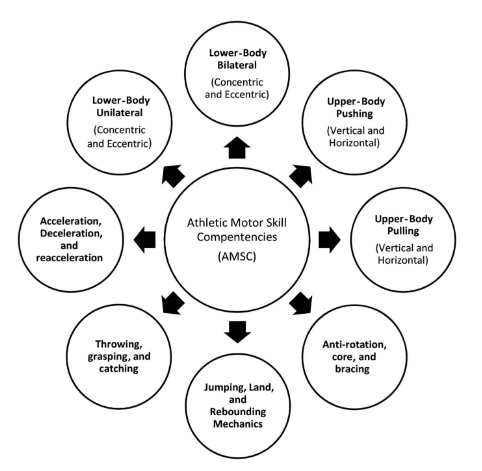
The Athletic Motor Skill Competency Model (Moody et al, 2013)
The Composite Youth Development Model
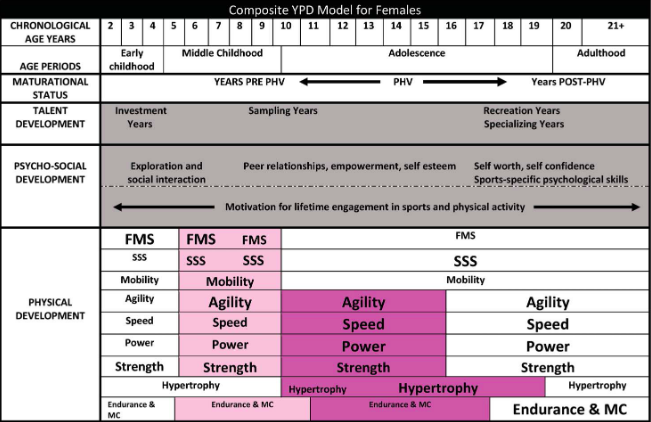
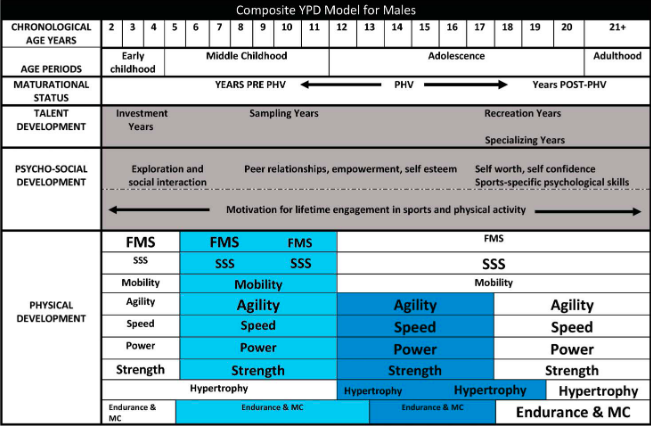
The Composite Youth Development Model is a flexible guide, not a strict rulebook, that coaches can use to support the overall growth of young athletes (Lloyd et al, 2015).
3. Reduce Injury Risk
If you're injured, then you aren't playing sport and you certainly aren't developing fundamental motor skills.
As well as teaching your child fundamental motor skills, a LTAD programme also includes a focus on injury prevention.
We aim to reduce future injury risk by increasing muscle strength, improving coordination, teaching you how to decelerate and addressing how to land from a jump (just to name a few).
Adolescents going through peak height velocity are predisposed to growth-related injuries such as Sever’s and Osgood-Schlater’s disease. These are forms of overuse injuries that are common when a skeletally immature athlete is exposed to high training loads, especially during periods of rapid growth (>7.2cm per year).
Measuring height on a monthly basis can monitor for periods of accelerated growth, which can subsequently allow for modifications in training volume and intensity, therefore reducing injury risk.
The adolescent growth spurt occurs at the onset of puberty :
Males : 12-14 years old
Females : 11-13 years old

Reduce Your Injury Risk.
4. Improve Sports Performance!
Athletes will learn key movement patterns (i.e. squat, hip hinge, press and pull) in the gym-based sessions, as well as be introduced to plyometric exercises (jumping, hopping, skipping, bounding and landing).
Pitch-based sessions will target the mastering of deceleration, acceleration, changing direction at speed, agility and running at maximum speed.
Becoming competent in these skills can only improve your performance on the court or pitch.
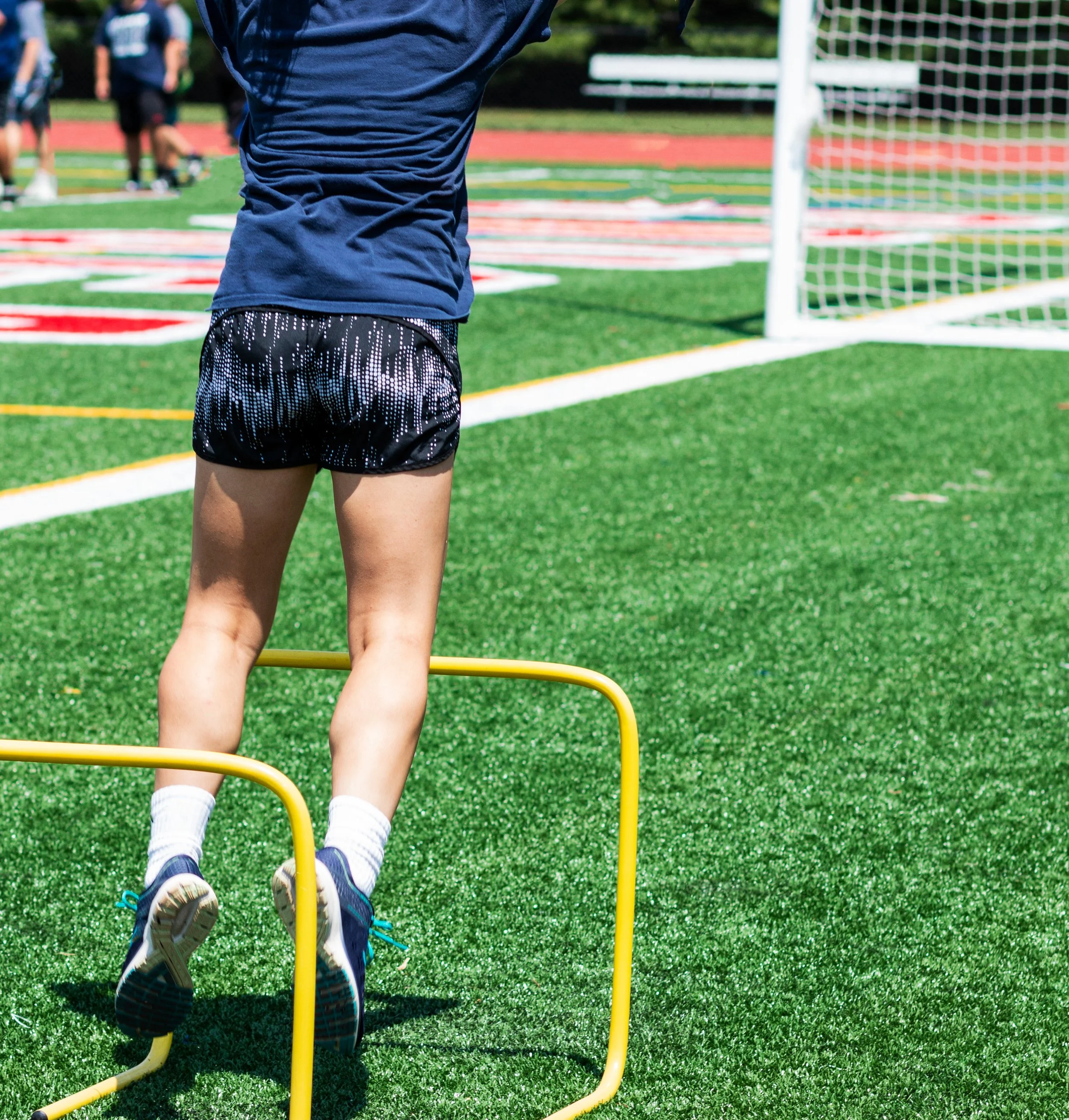
Plyometric Exercise Using miniHurdles
5. Promotion of Lifelong Participation in Sport!
The issue regarding adolescent females quitting sport at an early age is a topic of discussion in Ireland currently.
LTAD programmes can help to reduce the risk of this occurring, by improving physical literacy & improving performance. Positive changes in both of these will likely lead to higher levels of enjoyment in a sport.
Success Stories
David
"My teenage son went through Declan's Youth Athlete Development Programme as part of his rehabilitation from surgery for ostechondritis dissecans in his knee. Declan quickly established an excellent relationship with him. The improvement in his strength and speed was noticeable from the start to the end of the programme. I have no hesitation in recommending this programme and Declan as a physiotherapist."
Colin
"I have used Declan as a physio and also my 2 boys took part on his emerging junior athlete program. His knowledge of injuries, exercise, recovery and injury prevention is exceptional. He is very professional in everything he does from treatment, training, recovery and follow up. I would highly recommend anyone to use Declan whether it’s for physio services or as part of his athletic development programs."
Conclusion
Give your child the best start in sport and life. Our Youth Athlete Development Programme is a structured, science-based athlete development program designed to build athleticism, resilience, and confidence — not just for competition, but for long-term health and enjoyment of sport.
Why Choose us?
Evidence-based coaching: Programs built around strength, mobility, movement quality, and age-appropriate load progression to reduce injury risk and support steady physical gains.
Individualised development plans: Training tailored to your child’s age, growth stage, sport(s), and goals — whether they want to excel in a specific sport or become a well-rounded athlete.
Holistic approach: We combine physical training with movement education, recovery strategies, nutritional guidance, and mental skills to improve performance and wellbeing.
Injury prevention first: Emphasis on movement patterns and strength that protect growing bodies so your child trains more consistently and performs better.
Experienced coach: Work with a qualified sports physiotherapist and strength and conditioning coach of 20 years, with experience across various field and court-based sports.
Measurable progress: Regular assessments track improvements in speed, power, agility, strength, and movement competency so you see real results.
Program Highlights
FUNdamentals : Fun, play-based sessions that develop coordination, balance, basic strength and movement literacy.
Development : Introduces strength training, plyometrics, mobility, and sport-specific skills with safety-first progressions.
Performance : Advanced strength, power, conditioning and individualized load management to prepare athletes for higher-level competition and reduce overuse risk.
Small-group and 1:1 options: Group training for social development and cost-efficiency; one-on-one sessions for specific needs or rehabilitation support.
Parent updates and goal-setting: Regular check-ins and clear milestones so you stay involved in your child’s progress.
Outcomes To Expect
Better coordination, speed and strength appropriate to age and growth
Fewer injuries and faster recovery when they occur
Greater confidence, focus and resilience on and off the field / court
A sustainable training foundation that supports lifelong activity
Early, appropriate investment in athletic development builds physical literacy and reduces the risk of chronic problems later. Our Youth Athlete Development Programme creates confident, capable young athletes ready to perform and enjoy sport for life. Enroll today to secure your child’s place and start their development with a clear, safe plan tailored to their needs. Contact us to book an assessment and get a personalised pathway for your child.
